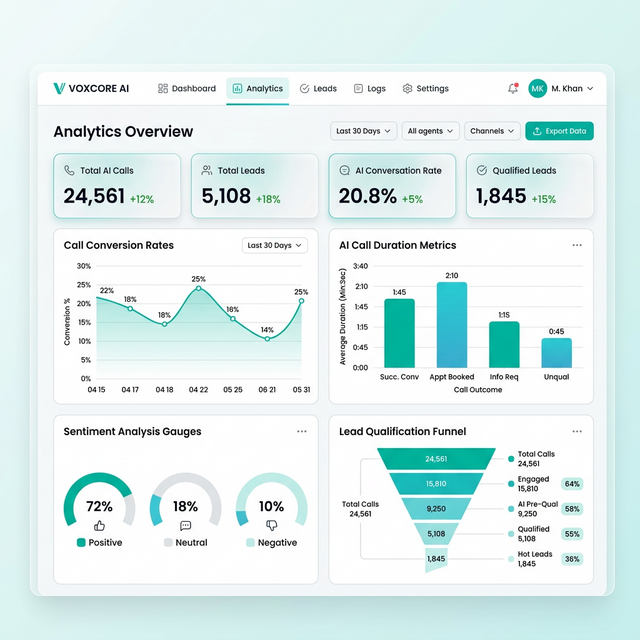
SaaS marketplaces are flooded with conversational AI wrappers. Since large language models (LLMs) and advanced speech-to-text models have become accessible through standard APIs, hundreds of vendors have emerged claiming to provide fully humanoid "AI Outbound Callers."
However, running a pilot is very different from managing a high-volume production environment. Enterprise operations leaders quickly discover that standard wrappers break when faced with variable network packet drops, complex regional Indian dialects, or direct regulatory requirements. Selecting the wrong voice software can lead to thousands of dollars in wasted call time, frustrated leads, or severe regulatory fines.
To protect your company from these risks, here are the 7 non-negotiable features you must demand and verify during any vendor evaluation.
1. Sub-Second Conversational Latency (< 800ms)
In human communication, turn-taking is rapid. If there is a delay between when a human finishes speaking and when the AI agent responds, it immediately breaks the illusion of natural conversation. When latency sits above 1.2 seconds, customers experience awkward pauses, become suspicious, or talk over the agent.
What to verify: Ask for the system's voice pipeline turn-taking latency. Platforms like CallQuants utilize highly optimized custom audio streaming networks to keep round-trip synthesis latency below 800 milliseconds over standard telecom networks, ensuring natural pauses and fluent responses.
2. National Do-Not-Call (NDNC) Filtering Integration
Outbound campaigns in India must adhere to strict telemarketing regulations enforced by the Telecom Regulatory Authority of India (TRAI). Outbound dialers that call registered NDNC numbers risk immediate carrier bans, caller identification flags, and heavy compliance penalties.
What to verify: The software must contain native, real-time NDNC scrubbers. Every list upload must undergo automated filtering against the active national database before dialing triggers. Note that CallQuants does not scrub against the NDNC/NCPR registry; you scrub your lists before upload, and CallQuants holds campaign calls to permitted calling hours and blocks numbers on your own do-not-call list.
3. Bring Your Own Telephony (BYO Cloud SIP Trunks)
Many voice AI vendors require you to buy outbound telecom minutes through them at highly inflated rates. This not only increases vendor lock-in but also prevents you from leveraging existing relationship rates with major Indian carriers.
What to verify: Demand an architecture that allows direct cloud SIP trunk integration. Your platform should let you seamlessly connect custom SIP trunks from providers like Plivo, Exotel, Airtel, or TeleCMI. For instance, CallQuants runs on a fully cloud-native dialing architecture requiring zero hardware overhead, allowing sales managers to connect their own carriers in 10 minutes.
4. High-Fidelity Speaker Diarization and Audio Separation
If you plan to use AI calling for CRM records, transcription, or sales coaching, the platform must capture both sides of the conversation perfectly. Standard telephony recordings often merge the customer and agent audio into a single mono track, confusing transcription engines and ruining conversational analytics.
What to verify: Ensure the software supports dual-channel, high-fidelity stereo recording, separating the agent voice from the customer voice. This allows speaker diarization tools to determine exactly who spoke when, ensuring flawless post-call analytics.
5. Event-Driven CRM Webhooks & Native Integrations
An AI caller that qualifying 500 leads daily is useless if your sales reps must manually export CSV sheets to find qualified prospects. Your AI voice agents should work as active nodes in your existing sales tech stack.
What to verify: Look for immediate webhook triggers that fire on distinct conversational milestones (e.g. `call_completed`, `intent_qualified`, `callback_requested`). This allows instant data synchronization with systems like HubSpot, Salesforce, or Zoho without custom developer pipelines.
6. Regional Dialect Mastery and Accent Adaptation
In India, customer communication is rarely conducted in standard, formal English or Hindi. Conversations naturally switch between Hinglish, local dialects, and regional vocabularies. If an AI caller is trained only on global standard datasets, it will completely miss slang and subtle objections.
What to verify: Run your trial with multi-dialect inputs. The system must support conversational synthesis that dynamically adapts to Hinglish, Kannada, Tamil, or local regional accents. CallQuants specializes in local language accent synthesis, allowing regional operations to converse naturally with tier-2 and tier-3 prospects.
7. Zero Platform Lock-in & Outcome-Based Billing
Most enterprise conversational AI providers charge high annual platform retainers or require deep B2B setup costs before writing a single line of dialog. This forces companies to take 100% of the operational risk.
What to verify: Demand a risk-free commercial structure. The vendor should offer simple prepaid wallet systems with transparent per-minute pricing (e.g. CallQuants' flat $0.03/min rate with $0 monthly platform fees) or pioneering outcome-based billing guarantees where you only pay when the AI secures a high-intent conversation outcome.
Summary Checklist
Before signing any conversational AI contracts, audit the vendor against this technical scorecard:
- Latency: Is it consistently under 900ms in live tests?
- Compliance: Does it scrub against active NDNC registries automatically, or must you scrub lists yourself?
- Telephony: Can you BYO carriers like Exotel or Plivo directly?
- Recordings: Are files captured in dual-channel stereo?
- Integration: Are there direct CRM webhook endpoints?
- Linguistics: Does the voice agent understand Hinglish and local accents?
- Contracts: Are you locked into annual platform licensing fees?
Audit Your Outbound Automation Today
Deploy an agile, high-performance voice agent on CallQuants' transparent per-minute architecture.
Deploy Your Free Pilot Agent →